


Can Luxury Fashion Survive on the High Street?
- Jun 13
- 5 min read
This question has been hanging around for years. But I’ve yet to put my two pence in, which is what I'll be rectifying today! Can luxury fashion actually survive on the high street? Not just exist there, not just make an appearance - but survive, with its identity, artistry and exclusivity intact?
Even with the honest answer being no, not entirely, the high street has long been flirting with luxury names, pulling them into collaborations that promise accessibility without (supposedly) sacrificing prestige. Sometimes it works. Sometimes it really, really doesn't. And right now, one collaboration in particular has the fashion world locked in and waiting for it to drop.
John Galliano X Zara. Two words I never thought would be put together. I have a lot of thoughts.
Has this been done before?
Before we get into the Galliano of it all, because we will get into it, let's establish that this isn't entirely new territory.
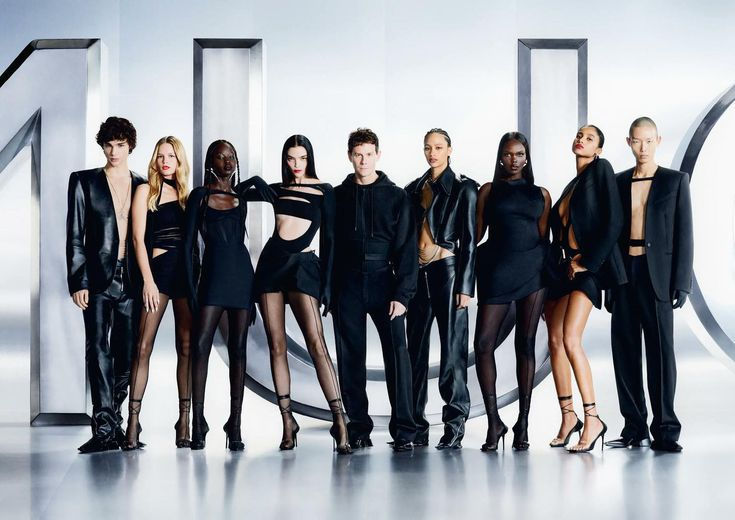
Mugler x H&M was a reasonably good execution. Casey Cadwallader's Mugler had already cultivated a very specific, very devoted following, and the H&M collaboration allowed those without the aligned budget to experience a glimpse of it themselves. It was exciting. People queued and reviewed it because it made sense.
And then there was Stella McCartney x H&M, which, I have to be honest, raised an eyebrow or two – mine included. Largely because McCartney has built her entire brand identity around sustainability and conscious fashion, and even though the collection may preach sustainability and environmental consciousness it is ultimately still coming from a fast fashion retailer.
So the two partnering up together seemed a bit ironic. The collection was beautiful, don't get me wrong, but there is a clear contradiction between preaching responsible manufacturing and partnering with one of the world's largest fast fashion giants.


These collaborations tell us something important: the outcome depends almost entirely on how much of the designer's actual DNA makes it through to the final product. Which brings me to Galliano – because his situation is arguably the most complex of them all.
John Galliano himself
For anyone who may not know of the great, and controversial, John Galliano, let me give you a quick refresher (no judgement, but also please read up on him immediately): John Galliano is one of the greatest, most theatrical, most genuinely visionary designers to have ever existed. Full stop.

His work at Givenchy and then Dior in the 90s and early 2000s was the kind of stuff that made fashion feel like a religious experience. Bias-cut gowns, historical references layered subtly for only the true art lovers to notice, runway shows that were more like theatre productions! He is not a simple man. His work is anything but simple – it is intricate, complex, masterful and magical in craftsmanship.
And Zara is… Zara.
The power of luxury
The thing about luxury fashion is that it thrives off exclusivity. The reason a Galliano-era Dior piece from 1997 still makes people lose their minds is partly because of the immense craftsmanship, yes, but also because not everyone has one. In fact only one person will have the original (and I envy them greatly.)
When you take a designer of that calibre and put him in line with a retailer that notoriously copies other designers, and that can turn around a micro-trend in two weeks, the relationship inevitably becomes complicated and unaligned.
The question isn't whether Galliano can create something beautiful within the constraints of mass production. Of course he can, he's a genius! The man could make a bin bag feel significant and it would be on the cover of Vogue within months. The question is what happens to the godly idea of Galliano and his infamous exclusivity when anyone can walk into their local Zara and buy it for £49.99.
It completely dilutes his greatness, but also his artistry which is what we need to look at next…
What's at stake here
Unlike Stella, Galliano doesn't have a pristine environmental brand identity to protect. His risk is almost entirely artistic. His identity is built on spectacle, on avant-garde clothing that's untouched by everyday life - and that's precisely why it's extraordinary.
Mass market fashion has to appeal to the majority. It has to be wearable. Palatable. Commercially viable at scale, so it can't be too abstract or unique. Which defeats the majority of the artistry behind a designer like Galliano, whose runway shows once featured models draped in newspapers and arriving on horseback.
There is, of course, a version of this that might work beautifully. The right creative brief, the right boundaries, the right level of trust between designer and retailer and you could get something that is both revolutionary and a huge money maker for both parties.
Zara gets cultural credibility. Galliano gets a new, wider audience. Consumers get access to the brain of one of fashion's greatest minds without needing a trust fund.
But it's at the cost of true artistry, design, and luxury as a principle that all this can occur. Which begs the question, “Is it even worth doing?”
So can luxury survive on the high street?
In all honesty I'm not a fan — which I think comes across. I think it can survive in fragments, but the quality will never align with the high street price tag. The designs will be simplified because to mass produce at that level they can't be sewn by hand and quality checked meticulously.
Luxury on the high street can work, but it requires the designer to retain enough creative control that the result still actually reflects them. I don't want to see a collection in September that is 99% Zara with a Galliano label slapped on it.

As consumers we need to understand what we're buying into. When the first drop comes out in September you will not be buying a Galliano piece. You are buying a Galliano idea, filtered through the lens of what's commercially possible at such a large scale.
And there is value in that, which I will admit to, absolutely! Giving a piece of Galliano to people who cannot afford his usual level of luxury. It’s a brilliant concept, but let's not pretend it’s the same as his earlier work. Owning a 2026 Zara x Galliano will never mean the same as owning a 1997 Dior by John Galliano gown, but they will have both been idealised by the same person, and that is enough for some.
September cannot come fast enough. I'm eager to see if he's still got his touch. I will be watching very, very closely.
What do you think… is this the future of luxury or the beginning of the end of it?
With love,
Mimi x
IG: @itswithlovemimi TIKTOK: @mimipiqua PINTEREST: @mimipiqua SUBSTACK: @mimipiqua



Comments